
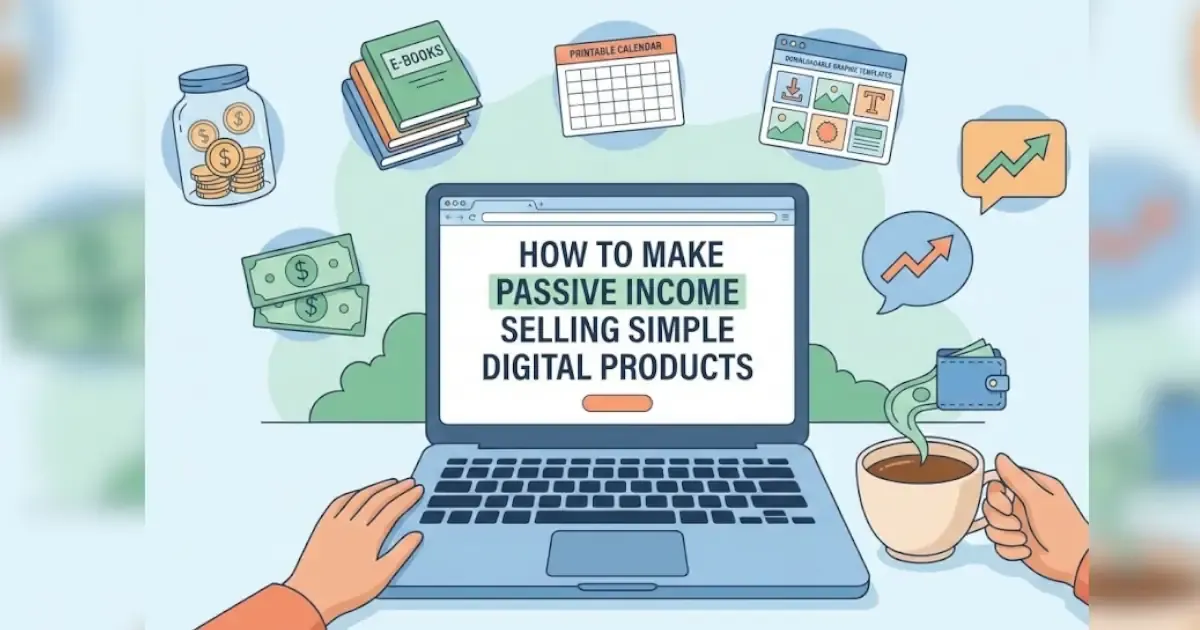
If you’re looking for a low-stress way to earn money online without dealing with shipping, inventory, or complicated tech, selling simple digital products is one of the easiest paths to passive income. You don’t need to be a designer, an expert, or a business guru. In fact, many creators earn consistent income from products they built once and now sell automatically 24/7.
This guide will walk you through how beginners can start selling simple digital products with low competition, minimal skills, and almost zero startup cost.
What Makes Digital Products a Great Passive Income Stream?
Digital products are downloadable files no warehouse, no shipping fees, and no restocking. Once you create the item and set up your store, your content can sell over and over without extra work.
Here’s why they’re perfect for passive income:
- One-time creation, unlimited sales
- Low competition in niche micro-topics
- Almost zero cost to start
- Great for people who don’t want to show their face
- Beginner-friendly tools exist for every type of digital product
Unlike traditional side hustles like surveys or freelancing, digital products let you build something once and get paid repeatedly making them ideal for long-term income.
What Are “Simple” Digital Products?
Simple digital products are items that don’t require advanced design, don’t need technical skills, and can be made using free tools like Canva or Google Docs.
Examples include:
- Printable planners
- Budget spreadsheets
- Checklists
- Habit trackers
- Meal planning templates
- Journaling pages
They’re easy to build and easier to sell because people constantly look for quick, ready-to-use solutions.
If you need inspiration for beginner-friendly ideas, check out these easy digital products you can create and sell online.
Step 1: Pick a Low-Competition Niche
Choosing the right niche is the difference between struggling and success. You don’t want to compete with huge shops selling everything. Instead, go micro-niche.
Here are examples of profitable, low-competition niches:
- ADHD-friendly daily planners
- Bible study worksheets
- Productivity templates for remote workers
- Simple wedding checklists for brides on a budget
- Fitness habit trackers for beginners
- Teacher resources for classroom organization
The more specific your niche, the easier it is to stand out.
Step 2: Research Products People Already Want
This step avoids wasting time creating something nobody buys.
You can check:
- Etsy search suggestions → Shows what buyers are already looking for
- Pinterest trends → People use Pinterest to find printable products
- Google Trends → Helps you confirm rising interests
- Competitor shops → See which listings have high sales
Look for items with steady demand but less competition.
For example: “Daily planner” is competitive, but “ADHD-friendly weekly planner” has far fewer sellers and more targeted buyers.
Step 3: Create Your Digital Product Using Free Tools
You don’t need design experience.
Here are beginner-friendly tools:
1. Canva (best for templates & printables)
Drag-and-drop, free elements, and pre-designed layouts.
2. Google Sheets or Excel (for budget trackers or spreadsheets)
Buyers love simple templates that help them manage finances or tasks.
3. Google Docs (for guides or checklists)
Perfect for simple instructional pages.
4. Notion Templates
Increasingly popular with digital planners and productivity lovers.
Tip: Keep your design clean, functional, and easy to use. Simple sells well.
Step 4: Package Your Product Correctly
Most simple digital products are delivered in:
- PDF (printables, worksheets, planners)
- PNG/JPG (stickers, social templates)
- ZIP files (multiple items in one package)
- Spreadsheet formats (.xlsx or .csv)
Name your files clearly so customers understand what they’re getting.
Step 5: Choose Where to Sell Your Products
You can sell digital products on platforms that automate delivery ideal for passive income.
Best beginner-friendly platforms:
1. Etsy
Great for beginners because people are already searching for printables.
2. Gumroad
No listing fees, simple setup, and automatic file delivery.
3. Payhip
Perfect for selling templates, PDFs, or digital guides.
4. Shopify (for scaling up later)
More advanced, but gives full control if you want to grow your brand.
Recommendation: Start with Etsy or Gumroad they’re easy and require no upfront cost.
And if you’re worried about lacking experience, this beginner guide explains how to sell digital files without any skills.
Step 6: Write a High-Converting Product Listing
A good product listing can make a huge difference. Use clear, helpful language and focus on benefits.
Include these elements:
- A keyword-rich product title
- A short description explaining what the buyer gets
- Clear bullet points
- High-quality preview images
- A usage description (e.g., printable, digital download, not physical)
Example keyword-focused title:
“ADHD-Friendly Weekly Planner Printable – Minimalist Productivity Template for Busy Adults”
This type of long-tail keyword helps you avoid heavy competition.
Step 7: Create Preview Images That Boost Sales
Buyers want to see what they’re getting before downloading. Use mockups to make your product look professional.
You can use free mockup generators like:
- Canva
- Smart Mockups
- Mockupbro
Show the best pages or elements, not the entire product.
Step 8: Automate Everything for Passive Income
Once your listing is published:
- Customers buy
- Payment is processed
- Files are delivered instantly
- You get paid even while sleeping
You only need occasional updates or customer support, but the core income is passive.
Best Simple Digital Products to Start With (Low Competition)
Here are easy digital products beginners can create that typically have low competition:
- Niche habit trackers
- Simple wedding planning sheets
- Home organization checklists
- ADHD productivity planners
- Savings goal trackers
- Morning routine worksheets
- Business expense spreadsheets
- Beginner fitness habit logs
Pick one niche and start with 1–3 items no need to create a huge store at the beginning.
Final Tips for Success
- Start small, then expand
- Use long-tail keywords to avoid competition
- Make your designs clean and easy to use
- Focus on solving specific problems
- Optimize your listings and preview images
Selling simple digital products is one of the easiest ways to build a passive income stream especially for people who want flexibility, anonymity, and low start-up costs.